Eleven To One: The Holdout Juror Memes
The Lindsay Clancy jury deadlocked on 4 September. One juror would not move. That was the story for about a week, and it produced almost no memes at all.
Then a single detail about that juror became public, and the internet produced more images in three days than it had in the previous seven.
The gap between those two things is the actual subject of this article.
What happened, briefly
This part is not the joke, so it gets handled plainly.
Judge William Sullivan declared a mistrial on Friday 4 September 2026, after roughly 38 hours of deliberation spread across seven days. The jury's note read: "It is with a heavy heart that we report we are unable to come to a unanimous decision and will not be able to."
The split was eleven to one. Clancy had pleaded not guilty to three counts of first-degree murder, with her defence arguing she was suffering from postpartum psychosis when her three children died. Eleven jurors were not prepared to convict. One was.
A hearing was set for 29 September to determine what happens next, which is five days after this article goes up. The case is live. Nothing here is a verdict on it.
Week one: the holdout as villain
Before anybody knew anything about him, the holdout already had a role assigned.
Among the large online audience sympathetic to Clancy, the reading was ready-made: another man who would not listen to a woman in crisis. One juror, refusing to accept a mental health defence, standing between a suffering mother and the end of her ordeal. That framing ran for about a week, more or less unchallenged, because there was nothing to challenge it with.
Note what that framing required. It required knowing his sex and nothing else.
Week two: one fact arrives
Then a fellow panelist told reporters that the lone holdout was a Black man, and the only person of colour on the jury.
The reaction was instant and enormous. Fox News covered the reveal. The Baltimore Sun ran a commentary on what it called the shameful racial scrutiny of a holdout juror. On CBS Mornings, Gayle King's response, "A Black man is the holdout juror?", became its own clip, circulated by people who thought the surprise in that question was the most revealing thing said about the case all month.
And the memes started.
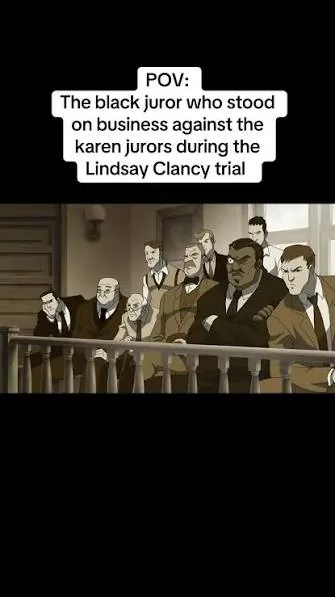
Within a day the holdout had been recast from obstacle to protagonist, by a largely different set of people, using the same set of facts about what he actually did in that room. He had not changed his vote. He had not said anything. One demographic detail moved him from villain to hero without a single new piece of information about his reasoning.
The outnumbered format
Most of what followed runs on one idea: one against eleven.
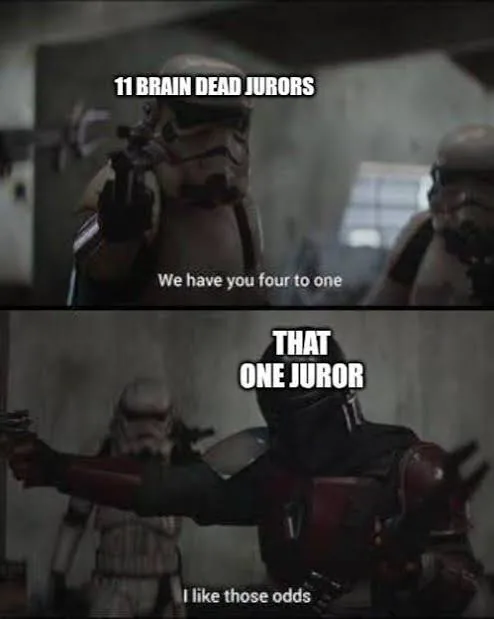
The image at the top of this page is the cleanest version, borrowing the Star Wars exchange where somebody points out the odds and the outnumbered party likes them. No politics in the frame at all, just arithmetic and a stance.
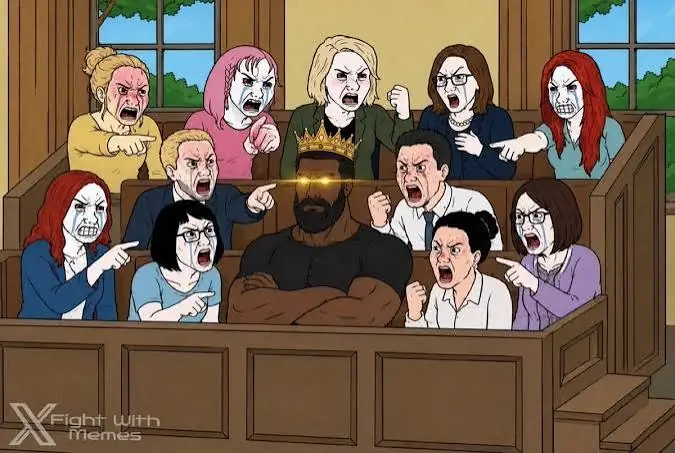
This is the one that circulated hardest. Eleven furious wojaks, drawn as the exact archetype the caption usually calls a Karen, and one seated figure given a crown, folded arms and glowing eyes. It is not arguing a case. It is a poster.
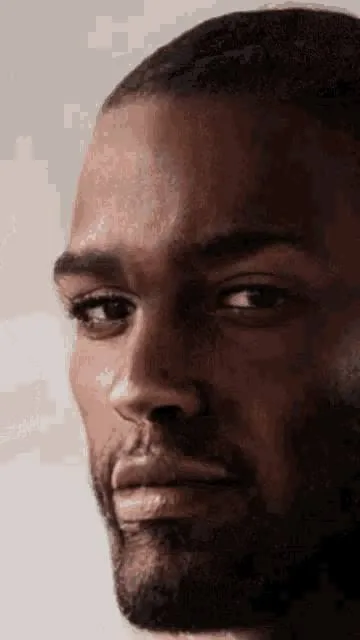
Here is the thing worth stopping on. That is a reaction clip of somebody else entirely, as are most of the faces attached to this story. Nobody has published a photograph of the juror. The internet has spent two weeks assembling a face, a physique, a crown and a personality for a private citizen it has never seen, based on two facts: how he voted, and his race.
The two that are not jokes
The strongest images in this wave are not really memes.
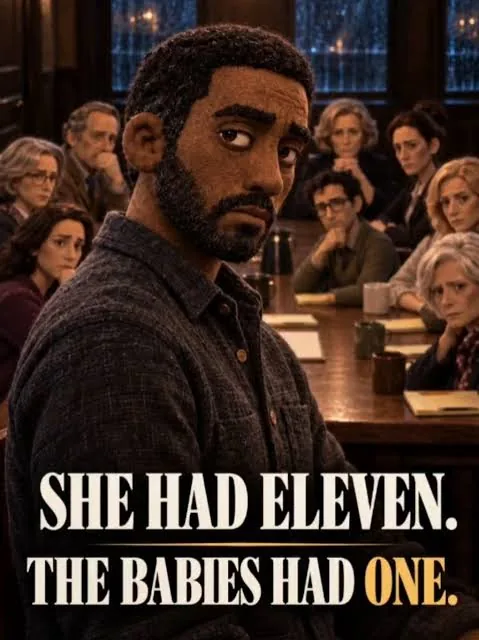
"She had eleven. The babies had one." That is a complete argument delivered in nine words, laid out like a prestige film poster. Whatever you think of the position, that is a properly constructed piece of rhetoric, and it explains the entire wave better than any of the funnier entries do. The people sharing these are not primarily making jokes. They are keeping score on behalf of three dead children.
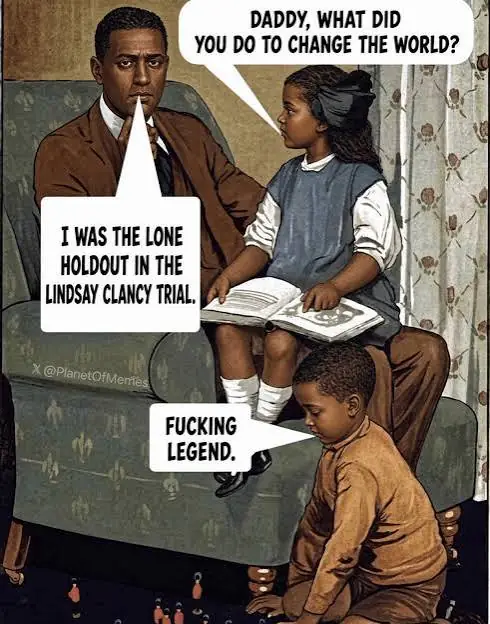
And this one borrows the visual language of civil rights era illustration to cast a deadlocked juror as a figure children will one day ask about. It is either the sincerest image in the whole wave or the most overblown, and the honest answer is that it is both, at the same time, depending entirely on what you already believed on 3 September.
What the memes are actually recording
There is a version of this article that just enjoys the pictures. The pictures are good, the crown is funny, and the poster is genuinely well made.
But the thing these images document is not really the juror. It is how quickly a story about a person can be rebuilt from scratch when one attribute changes, and how little the rebuilding has to do with anything that person did.
He was, in sequence: an unnamed obstruction, a man refusing to believe a woman, a hero, a crowned figure with glowing eyes, and a subject of national commentary about what it means that anyone was surprised. Through all of it, the only thing actually known about his conduct is that he sat in a room for seven days and did not change his mind.
The defence, for its part, argued in a filing that the holdout juror's reasoning reflected a bias against people with debilitating mental illness. That is a claim made by one side in a live case, and a court will deal with it on the 29th. It is not something a meme can settle, though several thousand of them have now had a go.
If you want the wider format, the internet jury duty meme covers how everybody online appointed themselves to this jury in the first place. And the NoodleStrike blog keeps up with whatever the internet is currently doing to itself.